



Roth IRA vs Traditional IRA: Which Is Better for Your Retirement in the USA? (2026 Guide)
 Anshu
Anshu- Apr 09, 2026
- 240
- 0
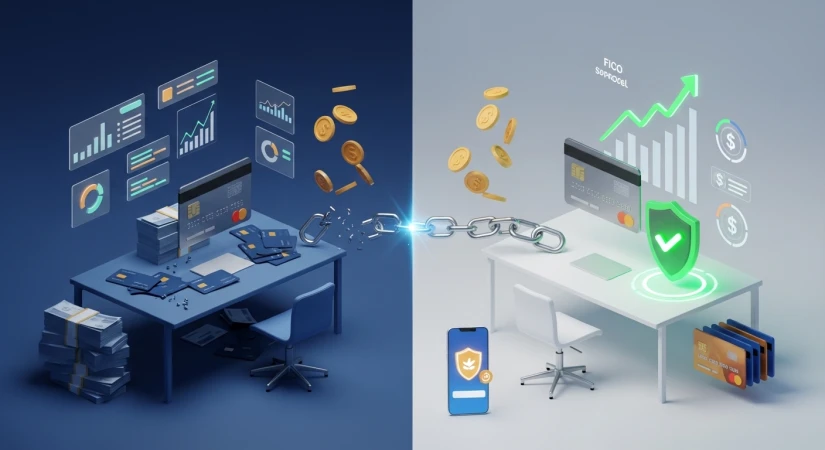
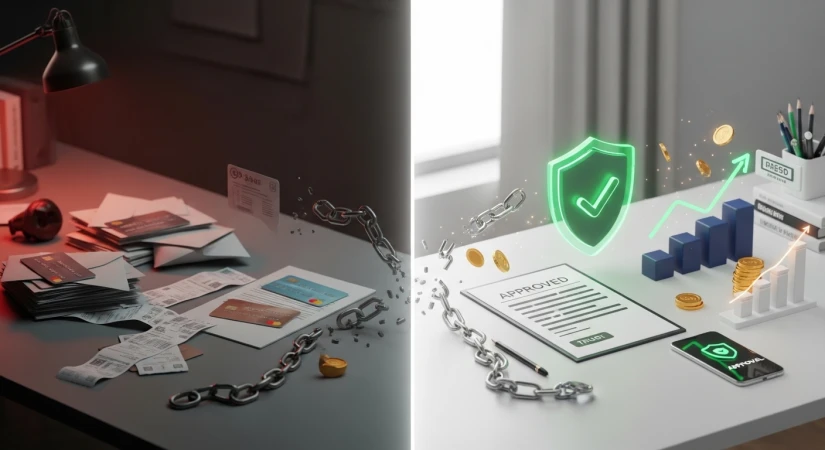
If you are staring at a mountain of monthly bills, the financial anxiety you are feeling is entirely real. Opening credit card statements only to see balances that never seem to decrease can leave anyone feeling hopeless and overwhelmed. When sky-high interest rates eat up every single minimum payment you make, escaping the cycle feels impossible. But you are not alone in this struggle, and there is a clear, mathematical path out of the trap.
Right now, American credit card debt has reached unprecedented, all-time highs. Official data confirms that US consumers are carrying an astonishing $1.28 trillion in outstanding balances. The primary culprit behind this financial drain is the record-high cost of borrowing. The average Annual Percentage Rate is really high at 20.97%.. New credit card offers are even worse at 23.72%. This is a problem for people with credit card debt. Luckily credit card debt consolidation is a way to get help. It is an legal way to get out of debt quickly.
It is when you get one loan to pay off all your old debts. This means you do not have to deal with credit cards at the same time. You know, the ones, with lots of minimum payments and super high interest rates of 25% or more. Credit card debt consolidation lets you combine all these debts into one loan. You secure a single financial product with one predictable monthly payment and a significantly lower interest rate.
As our community here at dearbloggers.com frequently discusses, the most successful borrowers are those who view consolidation as a strict financial reset. If you consolidate but continue to use your old cards for discretionary spending, you will quickly end up in a worse position.
If you have a credit score like a FICO score of 670 or higher using a 0% intro APR balance transfer credit card is a great way to save money. These credit cards let you move your high-interest debt to a card that does not charge interest for a little while usually between 15 and 21 months.
Some good options are the Citi Simplicity Card and Wells Fargo Reflect Card, which offer 0% interest for 21 months. The U.S. Bank Shield Visa is also a choice and it does not charge interest for up to 24 months.. You have to pay a fee to move your debt to one of these credit cards and this fee is usually 3% to 5% of the debt you are moving. With this fee using a 0% intro APR balance transfer credit card is a good idea because you can save thousands of dollars in interest over time. Using a 0% intro APR balance transfer credit card, like the Citi Simplicity Card or the Wells Fargo Reflect Card is a thing to do if you want to save money on interest.
If your total debt volume exceeds standard credit card limits, personal loans for debt consolidation serve as a highly powerful alternative. A personal loan provides a lump sum of capital upfront to pay off all outstanding creditors, leaving you with a single, fixed monthly installment over 24 to 84 months.
Lenders such as Upstart use types of information to approve people with various credit histories. On the hand SoFi works with borrowers who have good credit and does not charge any fees when you take out a loan. It is essential to check the Annual Percentage Rate because fees on personal loans can be as low as 1.85% or as high as 12%.
If you have a lot of debt and a high debt-to-income ratio, which might prevent you from getting a loan non-profit debt relief programs can be very helpful. With a Debt Management Plan you make one payment, to a certified agency, which then pays the people you owe money to.
These agencies can frequently negotiate to waive expensive penalty fees and lower your credit card APR from a punishing 25% down to single digits.
When facing an insurmountable mountain of unsecured debt, debt settlement options emerge as a final, high-risk alternative. This involves hiring the best debt consolidation companies USA has to offer to negotiate a lump-sum payoff that is less than your total balance. However, this requires you to halt payments to creditors, which instantly triggers massive damage to your credit profile, often dropping FICO scores by 60 to 125 points.
The fees are really high often taking up to 25% of the debt you owe.
First you need to take a look, at your debt. Write down the amount you owe the interest rate and the minimum payment for each debt. Calculate the interest rate to find out how much you really need to pay.
Next check your credit reports from Equifax, Experian and TransUnion. You can use online tools to see what interest rate you might get without hurting your credit score.
Now do the math. If you are moving your debt to a credit card add the fee to your total debt and divide it by the number of months you have to pay it off. Make sure you can afford the payment.
Also check the print. Before you sign anything make sure the loan does not have any penalties for paying it off
To consolidate debt without hurting your credit score you need to be careful.
You need to understand how credit utilization works. It is a part of your FICO credit score. About 30%. When you use a loan to pay off your credit cards your credit utilization goes down to zero. This can make your borrowing profile go up fast. Debt consolidation is about managing debt and credit utilization to improve your FICO credit score. By consolidating debt you can protect your FICO credit score and make it better, over time.
Do not close the accounts. Set up a small automatic payment that will be taken out regularly.
When you apply for credit it can lower your FICO score by about 3 to 5 points.
You should only use tools that do a check to see if you are likely to get approved for credit.
Only apply for credit when you are pretty sure you will get it this is called a check.
Consolidation Method Best Suited For FICO Score Impact Risk Level
0% Intro APR Balance Transfer FICO 670+; aggressive budgeters who can pay off debt in 15-21 months.
When you get a loan it can make your credit score go down for a little while because of the hard inquiry.. It gets better really fast when you pay off some of your debt and your utilization goes down. This is a low risk thing to do.
If you get a Personal Consolidation Loan and you have a FICO score of 600 or more and you have a lot of debt that you need to pay off over a time like 2 to 7 years this can be a good option for you. Often it can make your credit score go up away because it gets rid of the debt limits on your credit cards. This is a risk thing to do.
Some people use a Debt Management Program because they are having trouble paying their bills. They want to pay back all the money they owe. This can make your credit score go down a bit at first because your accounts get closed but it can help you build a good credit history over time. This is a risk thing to do.
Debt Settlement is something people do when they are in a lot of trouble and they do not see any other way out. It can really hurt your credit score making it go down by 60 to 125 points. It stays on your record for 7 years. This is a high risk thing to do.
Debt consolidation is a complicated thing. When you apply for a loan it can make your credit score go down a little bit because of the hard inquiry.. If you use a personal loan to pay off your credit cards that are maxed out the amount of debt you are using compared to your credit limit will go down a lot. This can make your credit score go up fast often in just a few weeks.
The best way to consolidate debt is different, for everyone. It depends on your credit score and how much money you have each month.
For consumers with FICO scores above 670 who can aggressively pay off their balance within 12 to 21 months, 0% intro APR balance transfer credit cards offer the highest mathematical return. For those with larger balances requiring up to 7 years, fixed-rate personal loans provide ultimate stability.
While home equity loans offer lower interest rates, they require leveraging your residential property as direct collateral. Using secured debt to pay off unsecured credit card debt is inherently dangerous. If you default, the lender can legally initiate foreclosure, putting your family home at severe risk.
Breaking free from the compounding weight of revolving liabilities requires decisive, deeply informed action rather than passive minimum payments. Escaping a 24% APR environment is absolutely paramount to your long-term wealth accumulation and daily financial stability.
By leveraging the appropriate financial instruments, you can permanently halt the erosion of your hard-earned capital and establish a finite timeline for total debt elimination. We really want you to think about the money you owe now. You should try to see if you can get a loan without it affecting your credit score. Then you can pick the way to put all your debts together that works for you and the money you have.
Are you going to use a balance transfer card or a personal loan to do this? Tell us in the comments which one you will use to get control of your money. Will you use a balance transfer card or a personal loan to get out of debt? Let us know how you plan to use a balance transfer card or a personal loan to fix your problems.
Credit Card Debt Consolidation
Debt Relief 2026
0% APR Balance Transfer
Personal Loans for Debt
Protect FICO Score
Best Debt Consolidation USA
Pay Off Credit Cards
Debt Settlement Options