





The Future of B2B Performance Marketing in 2026: What's Changing?
 Rsxigital Performance Marketing Agency
- Apr 10, 2026
- 214
- 1

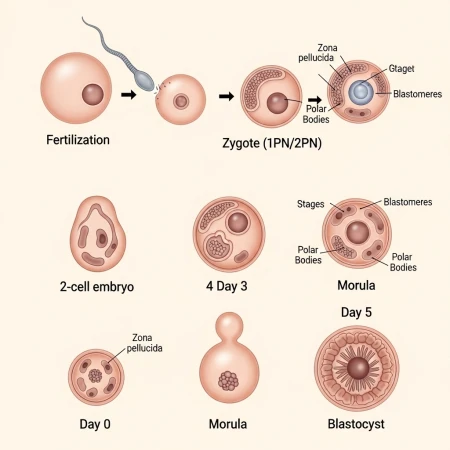
Discover 7 powerful reasons why blastocyst culture transforms IVF success rates. For Sivakasi couples, top fertility specialists use this advanced technique to boost pregnancy chances by 50-60% per transfer. This approach lets nature identify the strongest embryos before uterine placement.
Standard IVF moves embryos on Day 3 when they contain just 6-8 cells. Blastocyst culture extends monitoring to Day 5-6, allowing stronger embryos to grow into 100+ cell structures with clear inner cell mass and trophectoderm layers.
An experienced fertility doctor monitors this closely. Only 30-50% of Day 3 embryos reach blastocyst stage naturally. Those that succeed deliver double the implantation rates – 55% versus 28% for early transfers.
Think of it simply. Day 3 embryos resemble unripe fruit. Day 5 blastocysts show maturity and genetic strength. This extended observation reveals true potential.
Leading IVF clinics recommend blastocyst culture for these proven advantages:
1. Natural Selection Works Best
Weak embryos naturally arrest in culture. Only viable ones progress. This eliminates guesswork and reduces multiple pregnancy risks from transferring several fragile embryos.
2. Perfect Uterus Synchronization
Day 5 blastocysts reach the uterus exactly when natural implantation occurs – days 6-7 post-ovulation. Timing perfection boosts attachment success dramatically.
3. 50-60% Pregnancy Rate Boost
Clinical studies confirm 20-30% higher success per transfer, especially for women under 38 with good ovarian reserve. One strong blastocyst often equals three Day 3 embryos.
4. Single Embryo Transfer Made Safe
Stronger blastocysts support elective single embryo transfer (SET). This eliminates twin pregnancy complications while maintaining high success.
5. Breaks Repeated Failure Cycles
Couples with biochemical pregnancies or implantation failures see 70% success rates after switching to blastocyst protocols. It identifies why earlier cycles failed.
6. AI-Powered 2026 Selection
Modern labs use artificial intelligence analyzing time-lapse footage. Algorithms predict blastocyst formation with 95% accuracy – far surpassing human grading.
7. Banking Flexibility for Future
Vitrification freezes extra blastocysts at -196°C with 98% survival rates. Build a biological insurance policy for subsequent children or frozen transfers.
A skilled embryology team carefully selects candidates:
Younger women under 38 producing 8+ quality eggs see maximum gains. Multiple embryos create selection power.
Previous IVF failures benefit dramatically. Biochemical pregnancies or empty sacs often resolve with stronger blastocysts.
PGT-A genetic screening patients pair perfectly with Day 5 biopsy. Trophectoderm yields more DNA than Day 3.
Good AMH responders above 1.5 ng/ml qualify easily. Low responders risk having zero blastocysts available.
Avoid blastocyst culture if egg yield drops below 6, maternal age exceeds 40, or embryos show fragmentation. Day 3 transfer remains safer in these scenarios.
Top clinics achieve 55% blastulation rates. Average labs manage only 25-30%. Essential systems include:
Time-lapse incubators provide 24/7 non-invasive monitoring through Embryoscope+ technology. Embryologists spot irregular division patterns invisible to standard microscopes.
Sequential culture media mimics fallopian tube chemistry exactly. G-TL and Sage Bio formulations contain precise glucose, amino acids, and growth factors.
Low oxygen environments at 5% O2 reduce oxidative stress by 20%. Standard 20% air oxygen damages delicate embryos.
RI Witness RFID tracking ensures 100% sample security. No mix-ups, no contamination.
Perfect blastocysts fail without proper endometrial preparation. Target 8-12mm triple-layer lining measured by ultrasound.
HRT protocols deliver oestradiol 3-5mg daily plus progesterone 400mg. Blood monitoring fine-tunes hormone levels precisely.
ERA testing identifies personalized implantation windows for recurrent failure patients. Success jumps 25% with customized timing.
PRP platelet-rich plasma infusions help thin endometrial lining cases. Emerging data shows 15% improvement in refractory patients.
Standard IVF costs ₹1.2-1.6 lakhs with 40% success. Blastocyst IVF runs ₹1.8-2.5 lakhs but delivers 60% success.
Math proves the savings: Two standard cycles cost ₹2.4 lakhs total. One blastocyst cycle costs ₹1.8 lakhs with higher success. Patients save money and heartbreak.
Local Sivakasi access eliminates Chennai travel expenses. Tamil Nadu government schemes cover 30-50% of advanced IVF costs for residents.
45% blastulation failure rate remains normal and expected. Not every Day 3 embryo becomes a blastocyst.
1.5% monozygotic twinning risk slightly increases with laser hatching assistance. Most resolve healthily.
25% higher lab costs reflect premium equipment and extended monitoring. The 50% success jump justifies investment.
A reputable fertility center maintains transparent audited statistics – targeting 55% clinical pregnancy rates without overpromising.
Ask these questions to identify the right IVF expert for your journey:
Start these 3 months before stimulation:
Local specialists achieve 52% blastocyst rates versus Chennai's 58% at higher travel costs. Madurai chains offer 48% success at competitive pricing.
Proximity advantage: Zero travel stress, same-day monitoring, family support nearby.
Day 1: Stimulation medications begin.
Day 14: Egg collection under sedation.
Day 19: "Multiple blastocysts confirmed!" celebration call.
Day 24: Embryo transfer – single best blastocyst placed.
Day 37: Beta hCG blood test confirms pregnancy.
Pro tip: Join Sivakasi fertility WhatsApp groups for real patient support.
AI KID Score Day 1 prediction identifies blastocyst-formers from zygote images.
Microfluidics chambers create artificial fallopian tubes with 15% higher basculation.
Stem cell co-culture boosts weak embryo progression by 20%.
Schedule consultation with the best fertility specialist in Sivakasi offering: